






As International Women’s Day is more than a symbolic moment in the calendar, we decided to take on the opportunity and discuss how women are shaping the future by bringing diversity in the workplace.
Having this in mind, it is not surprising at all that gender diversity, in recent years, has become a strategic priority for the majority of HR leaders - not only from a social responsibility perspective but also from a business prosperity one.
Numerous studies show how companies that prioritize hiring women and building gender-balanced teams often benefit from stronger decision-making, improved innovation, and a more resilient organizational internal culture. That being said, organizations with greater gender diversity, particularly at leadership levels, are more likely to outperform their competitors.
However, achieving meaningful gender diversity requires more than simply stating diversity goals. It also requires actions and involves intentional hiring strategies from recruiters. In order to close the gender diversity gap, HR teams should comprehend the need for inclusive workplace policies, as well as the one for clear understanding of how hiring women contributes to the overall business performance of the corporation.
Below, employers will find the top 7 key reasons why companies that actively focus on hiring women strengthen their workforce and position themselves for long-term success.
Why does gender diversity matter in today’s workplace?
The truth is that in today’s rapidly evolving labour market, companies face increasing pressure to remain competitive, innovative, and adaptable to the economic changes. One factor that consistently contributes to these goals is workplace diversity.
Gender diversity has proven to have measurable business benefits for companies, confirming that organizations with gender-diverse executive teams are significantly more likely to outperform financially. When comparing them to those with less diversity, the results are significant.
Similarly, gender equality in the workplace contributes not only to the organizational and financial performance, but as well to the overall economic growth.
When companies invest in hiring women, they broaden their perspective within teams. Diverse viewpoints challenge assumptions, encouraging more balanced discussions around strategy and innovation.
Therefore, this diversity is not just a nice-to-have feature, but rather a core element. It is driving competitive advantage for the economic growth of the company as a business that continues to operate in the complex global environment.
What are the 7 benefits of building a women-dominated work team?
Here is our advice to employers on the top 7 benefits that hiring teams across Europe noticed after incorporating more women into their companies:
1. Diverse teams make better decisions
One of the most frequently cited advantages of gender diversity is improved decision-making. Teams composed of individuals with different perspectives, experiences, and backgrounds tend to evaluate problems way more thoroughly and consider a wider range of solutions.
That is why when it comes to making decisions, diverse teams often are more effective in agreeing on choice, compared to homogenous coworkers. The latter usually challenge assumptions and avoid group thinking, which are the two pillar factors of a good brainstorm session.
When companies prioritize hiring women alongside men, they introduce additional points of view. Consequently, this leads to more balanced discussions and stronger strategic outcomes, combining the diverse backgrounds of each participant.
Therefore, diverse teams provide a significant advantage in many industries across the globe, especially in the fast-moving ones where innovation and problem-solving are essential skills.
2. Companies With Women Leaders Often Perform Better Financially
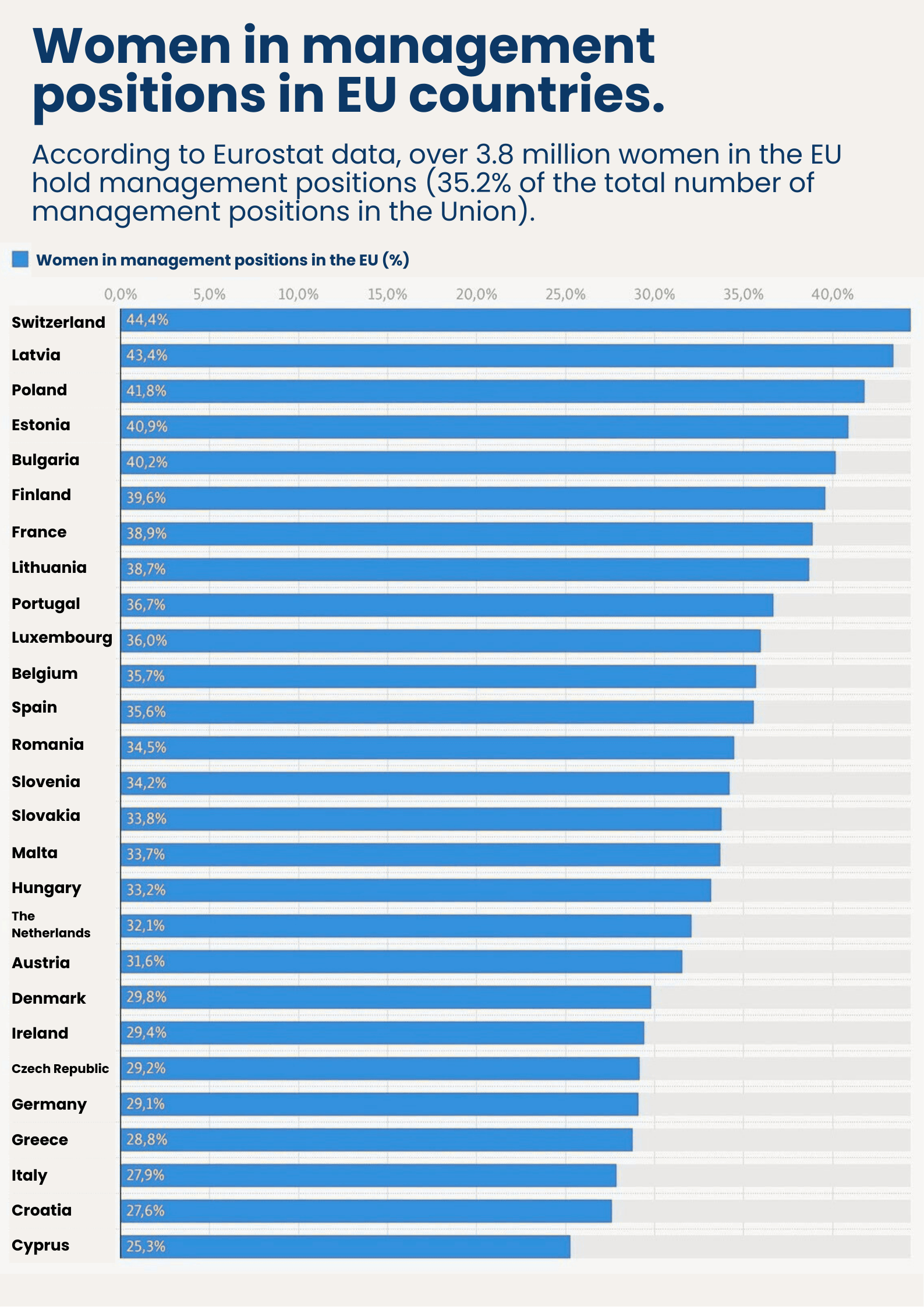
As mentioned above already, multiple global studies have found a positive correlation between female representation in leadership roles and company performance. Organisations that include female employees in their senior management and executive positions often report stronger results and improved overall governance.
Additionally, it has been regularly highlighted by statistics that companies with higher gender diversity in leadership positions are more likely to achieve above-average profitability, supporting the financial state of the organization.
However, gender diversity alone cannot guarantee success, but it surely contributes to better risk management, stronger leadership dynamics, and more balanced strategic decisions.
3. Women Strengthen Collaboration and Workplace Culture
You won’t be surprised by the undebatable fact that workplace culture plays a major role in employee satisfaction, productivity, but also long-term retention. That is the reason why organizations that focus on inclusive hiring practices often notice improvements in communication and collaboration across teams.
Many studies suggest that women tend to emphasize cooperation, communication, and relationship-building in professional environments more than male workers do. These skills can strengthen team cohesion and improve the way employees work together, making the women workforce beneficial for the company.
By prioritizing hiring women as part of a balanced workforce, companies can cultivate more collaborative work environments where employees feel supported, respected, and engaged.
4. Hiring Women Expands the Talent Pool
One of the simplest but most important advantages of gender-inclusive hiring that recruiting teams underestimate as a benefit, is the access to a larger and more diverse talent pool.
In many industries and economies across Europe, companies struggle to fill critical roles due to talent shortages and low unemployment rates. Limiting recruitment strategies to a narrower demographic group reduces the number of qualified candidates available to employers.
However, by actively encouraging female candidates to apply and ensuring inclusive hiring processes, companies can attract skilled professionals who may otherwise be overlooked, missing a huge opportunity to make a good match between role and candidate.
That is why expanding their recruitment strategies helps organizations access a broader range of expertise and experience.
5. Women Drive Innovation and Creativity
Innovation thrives in environments where people with different points of view collaborate and exchange ideas. Therefore, diverse teams challenge conventional thinking and encourage creative problem-solving.
However, this applies as well to companies that have diverse leadership teams, built from both men and women. They are often keener to generate higher levels of innovation and develop more successful new products, boosting the team’s productivity.
Hiring women contributes to this variety of perspectives, helping companies develop new ideas, improve products and services, but also adapt more effectively to changing market demands.
6. Gender Diversity Strengthens Employer Branding
Employer branding has become an increasingly important factor in attracting top talent across Europe. Candidates today pay close attention to company values, workplace culture and benefits, and diversity initiatives before deciding to apply for a role.
That is why companies (and therefore recruiters) known for promoting gender equality and inclusive workplaces often enjoy stronger reputations among job seekers.
Younger generations of professionals, in particular, expect companies to demonstrate clear commitments to diversity and inclusion, as the labor market is complex enough already.
By actively focusing on hiring women and building inclusive teams, companies position themselves as forward-thinking employers that attract high-quality candidates.
7. Gender Equality Supports Long-Term Organizational Sustainability
Sustainable organizations are those that adapt successfully to social, economic, and workforce changes over time. Gender diversity in the team contributes to this adaptability by ensuring that companies represent a broader range of perspectives and experiences.
Another factor is that broad work environments tend to experience higher employee satisfaction and retention levels. This is due to the fact that when employees feel valued and supported, they are more likely to remain with the organization and contribute to its long-term success.
For companies planning future growth, investing in gender equality and hiring women across different levels of the organization helps build a more resilient and sustainable workforce over time.
Challenges Women Still Face in the Workplace
Despite progress in recent years, women continue to face several challenges in the workplace. Issues such as the gender pay gap, underrepresentation in leadership positions, and unconscious bias in recruitment processes still remain important concerns for HR teams.
Many women also experience difficulties balancing professional development with family responsibilities, particularly in organizations that lack flexible work policies, making it impossible for them to grow on both fronts. These challenges are limiting career advancement opportunities and reducing female representation at senior levels.
Recognizing all those barriers is an important first step for employers seeking to create more inclusive workplaces. HR teams that actively address these issues contribute to building work environments where female employees can thrive and grow their career development.
How HR Teams Can Attract and Support More Women in Their Organizations
Acknowledging all benefits that female employers can bring to your organization and all challenges that they are still facing, are only the first steps in building an inclusive work team for your company.
HR professionals should know how to build their recruiting strategy in order to attract and eventually hire women in their workplace.
Build Inclusive Hiring Practices
Creating gender-balanced teams begins with fair and inclusive recruitment processes. Companies should review job descriptions, hiring criteria, and interview structures to ensure their recruiters are free from unconscious biased decisions.
This can be done through very well structured interviews and standardized evaluation criteria, helping to ensure that candidates are assessed based on skills and experience rather than subjective impressions.
Offer Flexible Work Policies
A perk in the candidate’s decision-making for a job is always going to be the flexible work arrangements.
Hybrid work models, remote work opportunities, and flexible scheduling allow employees to better balance professional and personal responsibilities. Therefore, organizations that implement flexible policies are often more successful in attracting and retaining female talent.
Invest in Leadership Development for Women
Supporting women’s career growth is another critical step in creating inclusive workplaces. Mentorship programs, leadership training, and professional development initiatives help prepare female employees for leadership roles.
By investing in leadership development, companies ensure that women have equal opportunities to advance within the organization, without feeling excluded.
Building a Workplace Where Women Can Thrive
Hiring women and acknowledging why this will benefit the company is only the first step towards achieving meaningful gender diversity in the workplace. For organizations to fully benefit from inclusive hiring strategies, they must also create environments where women can succeed and grow.
This includes establishing transparent career paths, promoting fair promotion practices, and encouraging broad leadership styles. When companies combine comprehensive recruitment with supportive workplace policies, they create cultures where diverse talent can flourish and expand their potential.
Hiring women as a strategic decision for recruiters
For modern organizations, hiring women is not simply a diversity initiative, but rather a strategic advantage. Why?
Because as women are changed by the workplace they thrive in, the labor market and the workplace culture around the world is also evolving, by including more and more female presence.
Gender-diverse teams bring stronger decision-making, improved innovation, and healthier workplace cultures.
Companies that prioritize inclusive recruitment and invest in supportive environments position themselves to attract top talent and remain competitive in a changing global workforce.
As International Women’s Day reminds us, building gender-balanced teams is not only about equality. It is also about creating stronger, smarter, and more sustainable organizations for the future, but also empowering women as a leading force.